
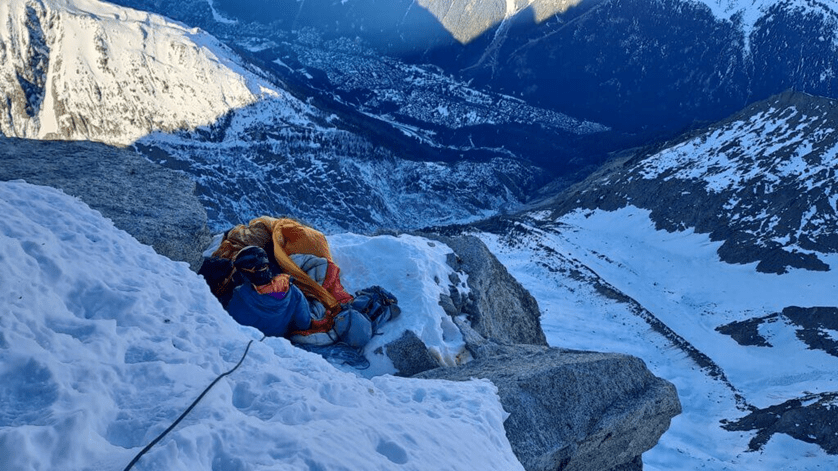
/The morning air is sharp and the atmosphere tense. Carrie my climbing partner in crime, two French PGHM rescuers and I, are all pinned to thin slings belays. We are only a couple of hundred meters away from the top of the Dru, one of the pointy mountains above Chamonix Valley. Heavy armours of boots, gloves and layers of technical clothes help us in our battle with the harsh cold at that elevation./
I removed my gloves to adjust a zipper but tried not to touch the rock too much. The dehydration and dry air left my skin rough and sensitive. Any contact with the elements that I normally love, now brought me only pain. Our last-minute mission to do a winter ascent of the north face of this mountain via the Allain-Leininger route has failed miserably after three days of effort. I felt exhausted, embarrassed, and upset. It’s all my fault but this is not how I imagined it. I shouldn’t had rushed this plan forward after I ripped my ACL on skis a few days earlier. I wanted to get to the mountains as soon as possible before I got a doctor’s diagnosis that could speak to my reason and prevent me from doing it. Worse, I psyched up my friend into this delusion. The gendarme shouted to me and snaped me out of my guilt trip, “Monte au-dessus du relais vers mon autre côté”. He wanted me to go to the other side of the belay.
I stopped and hesitated, just when I thought the situation couldn’t get any more ridiculous this happened – Did he say “au dessus” or “en dessous”, does he want me to get there going “above” or “below” the belay? – I convinced myself he meant underneath because the rock above looked slabby, icy and tricky to stand on. As I started to squeeze myself between him and the rock under the belay he turned to his colleague and shouts “Putain, mais qu’est-ce qu’elle fout?” that which I understood perfectly, he was not happy with what I was doing, he must have meant above and not below. Damn, I thought I could tell these two French words apart. I could see that, except me, no one understood my problem. After some more reshuffling and huffing the helicopter took us off the mountain and down to the Chamonix Valley. The gendarme made sure that we are not severely hurt and then started his dutiful reprimands. We lowered our heads and listened.
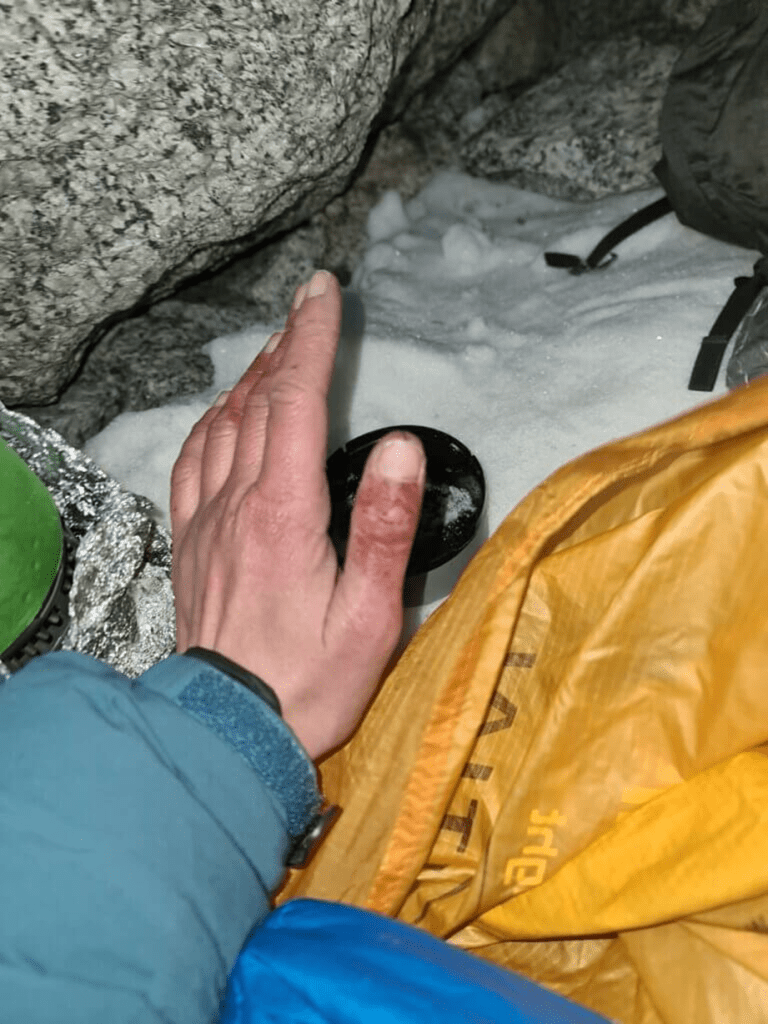
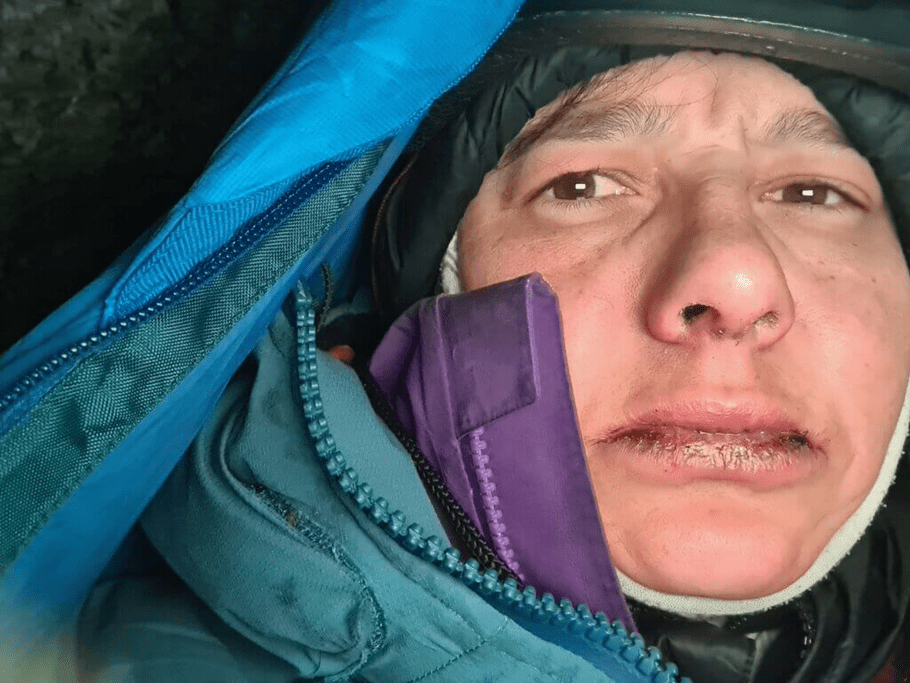
Exhausted, my gaze focused on the dry blood on my hands from scratches and dehydration, I licked my lips, and my swollen tongue ran over a rough surface of cracks. Why do we put ourselves through so much pain? I asked myself, and more questions followed. Why did I want to climb this mountain so badly, against reason? Was I trying to prove something? Was it to connect or to escape? Some homework had to be done here for the sin of making the heavens ring with the noise of helicopter blades.
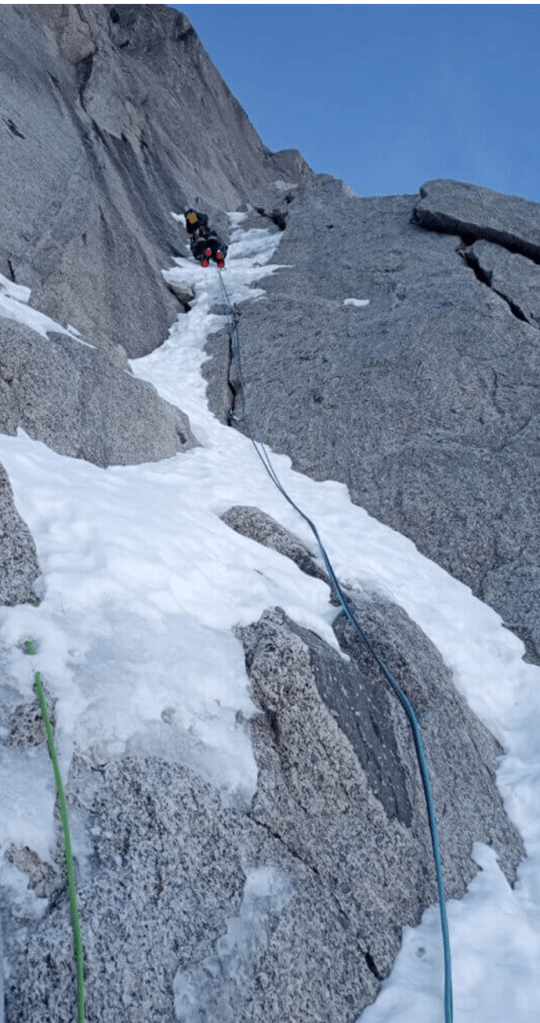
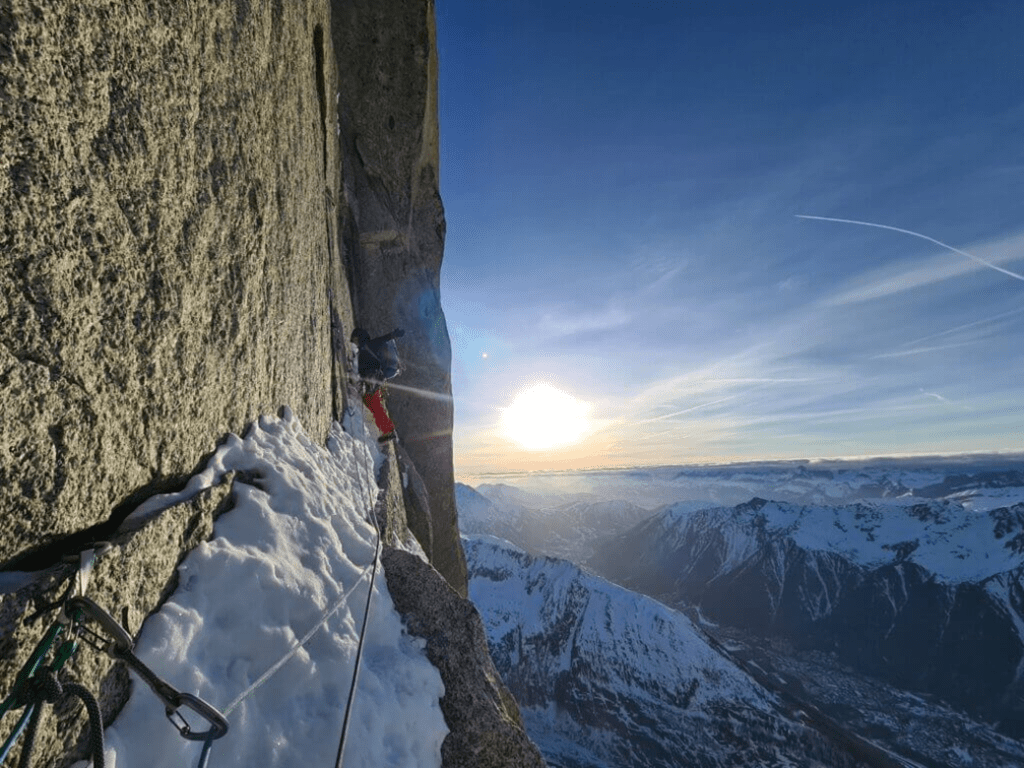
To fill you in, by then I had been climbing for fourteen years, living in Chamonix for twelve years, and travelling since I was little. This is to say that I believed I was experienced enough in the mountains around me and familiar with adventures. I felt that my interaction with nature and people came from a motivated but healthy need for learning and exploring. Recently however, I started wondering how much of that was influenced by lateral forces? Chamonix is an interesting stage. So many inspiring and strong personalities bouncing off each other. I regard those interactions as constructive, but are they always? Sometimes they can lead to comparison. We feel that what we are doing is maybe less valuable than what others are. Our self –worth, and related happiness, become too reliant on our achievements.
Say you have done a day of climbing. You are satisfied and for the next day you plan to chill and simply catch up with a friend. In town you run into another friend and they ask you: how come you are not in the mountains? The conditions are so good. Immediately you feel like your identity has been questioned. You smile and throw an explanation then carry on to see the friend you wanted to meet. Yet now you find it hard to focus on what this friend is saying. The view of the mountains in the background makes you want to rush this meeting so you can start planning next adventure. While your friend goes to the bathroom, you take out your phone and start messaging potential climbing partners. You glance on social media and see perfect pictures and videos of the good time that other people had in the mountains. What a wasted day!
This also brings us to another observation. There seem to be a shortage of true care and attentiveness in our frantic life style. Your friend whom you invited for coffee will leave the meeting feeling like you were not listening to them. They might find it hard to open up about their weakness and concerns while everyone around them appears to be so successful and goal oriented. If they do mountain sports they might too seek some comfort in them. After all nothing connects you with other people and the present moment like a raw experience in the outdoors.
Nature in general has always been a place and way to escape the ordinary life. We seek outdoor challenges for the thrill, to be free and to top up the life satisfaction that constantly evaporates our hearts and minds. There is nothing wrong with all those motives. I just wonder if this thirst for unique experiences leads to a higher tolerance for risk taking. Additionally with lifts, helicopters and modern alpine equipment we can instantly access formidable alpine terrain of sharp ridges, rough granite and dark cold crevasses. This combination of why and where led to quite a few mountain rescue situations in Chamonix. Including mine!

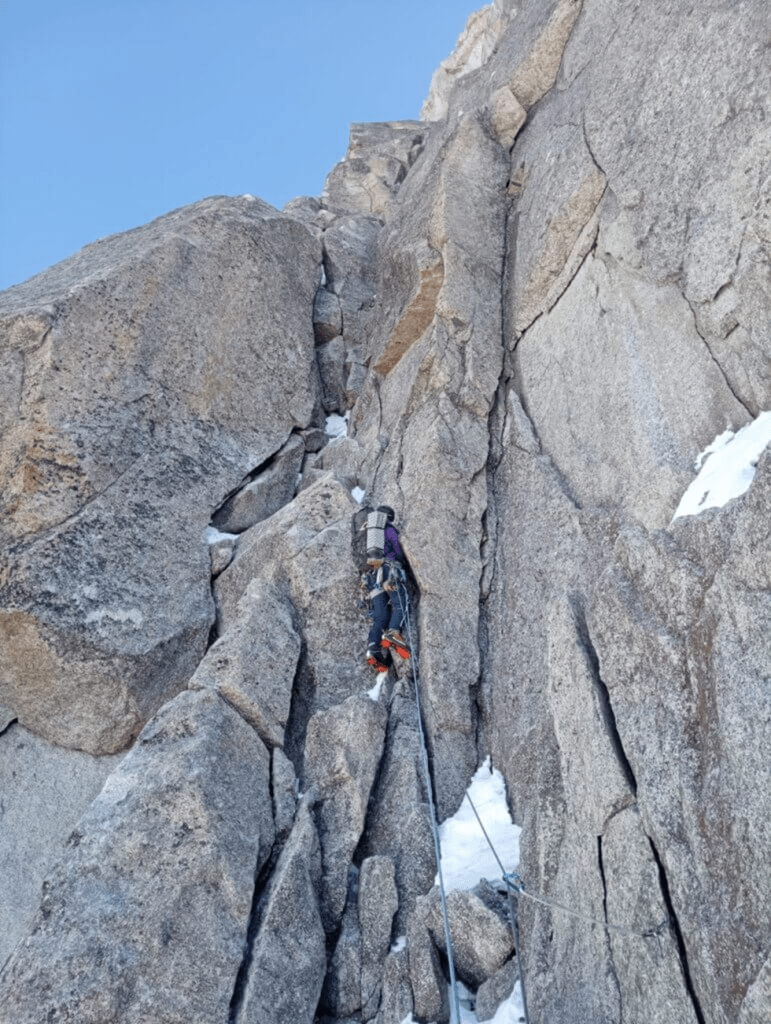
I learned my lesson and strongly believe that high-risk sports should be undertaken with the highest level of achievable control. At the same time I leave it up to discussion whether we can enjoy them at all without any drive. There are few things more pleasurable and fascinating than watching someone doing something with passion. However, the essential safety step, that I forgot to implement, was honesty. I failed to be brave enough to scrutinise the motives behind my goal and check that my fitness was adequate to my wish. This requires a strength and courage similar to that required for climbing mountains.
By now I try not to over-romanticise the mountains when I make decisions. My heroes are no longer those who take every chance but those who choose the right moment. Life is full of challenges but I don’t expect rash adventures to solve them. Meanwhile the conditions in the mountains are perfect. A friend of mine is looking for a climbing partner but I won’t go. Not today.
Epilogue
Thank you to the PGHM for their invaluable help. Thanks to all my friends and wonderful people in the Chamonix Valley for accepting the weirdo in me. I wish us all time and space to express ourselves in ways that hopefully would be better than trying to climb the Dru with a broken ACL…
Fly Back Home

![How to Focus and When to Chaos [Part II]](https://suzanaelmassri.blog/wp-content/uploads/2025/04/20230716_083613.jpg?w=1024)
![How to Focus and When to Chaos [Part I]](https://suzanaelmassri.blog/wp-content/uploads/2025/02/20250112_141419.jpg?w=1024)
 suzanaelmassri.blog
Leave a comment